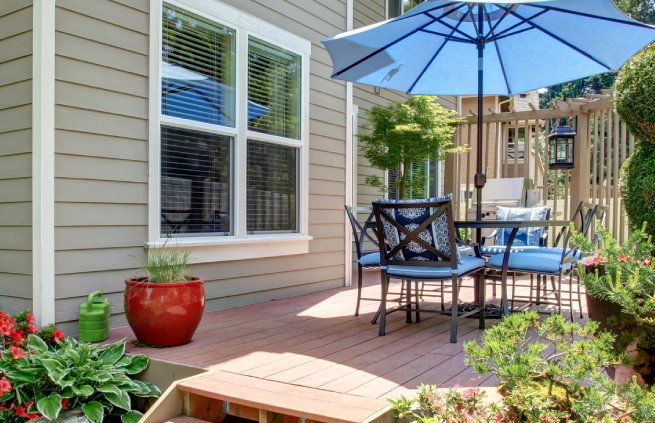
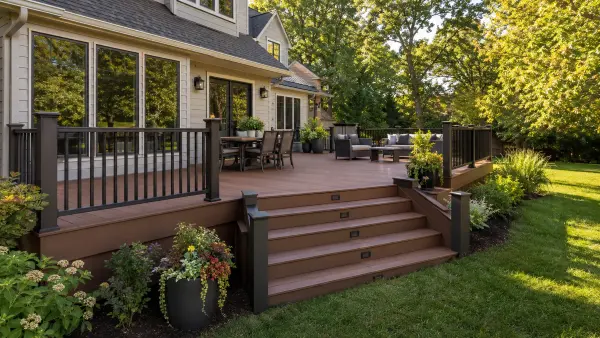
Summary: A Composite Deck St Michael homeowners can enjoy should balance space, safety, durability, and everyday function. Composite decking offers lasting color, reduced maintenance, and many design choices. Careful planning also helps the deck complement your home, yard, and lifestyle.
Frequently Asked Questions About Composite Decks in St. Michael

Is composite decking a good choice for Minnesota weather?
Yes. Quality composite decking resists moisture, fading, splintering, and common weather-related wear. Correct installation remains essential for long-term performance.
Does a composite deck require maintenance?
Composite decking needs regular cleaning but does not require traditional staining or sealing. Homeowners should still remove debris and inspect the structure.
Do I need a permit for a deck in St. Michael?
St. Michael requires permits for many deck projects. Requirements depend on attachment, height, footings, accessibility, and the proposed design.
Can composite decking be installed over an existing deck frame?
Sometimes. The existing frame must remain structurally sound, properly spaced, level, and suitable for the selected decking product.
How long does composite decking last?
Quality composite decking can provide decades of service. Product line, installation, exposure, maintenance, and warranty coverage affect its lifespan.
How much does a composite deck addition cost?
Cost depends on size, height, framing, stairs, railings, materials, access, permits, and design features. A detailed estimate provides the best guidance.
Planning a Composite Deck St Michael Homeowners Will Use
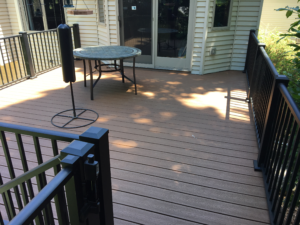
A successful deck should support the way your household spends time outdoors. Size alone does not determine whether a layout works.
Consider how you plan to use the finished space. Your goals may include dining, grilling, entertaining, relaxing, or supervising children.
St. Michael’s seasonal weather also affects deck planning. Snow, rain, sunlight, freezing temperatures, and repeated thawing place stress on exterior materials.
Composite decking offers a durable alternative to traditional wood boards. It also reduces ongoing staining, sealing, and splinter-related maintenance.
However, the surface boards represent only one part of the project. Framing, footings, drainage, stairs, railings, and connections require equal attention.
Why Homeowners Choose Composite Decking
Traditional wood offers a familiar appearance but requires regular upkeep. Composite decking provides a lower-maintenance alternative with many natural-looking finishes.
Common composite decking benefits include:
- No routine painting, staining, or sealing
- Resistance to splintering and cracking
- Consistent color and board appearance
- Many wood-grain patterns and color choices
- Improved resistance to moisture and common stains
- Coordinated fascia, trim, and railing options
- Manufacturer warranties on qualifying products
- Less annual maintenance than traditional wood
Composite decking still requires care. Routine cleaning helps remove pollen, dirt, leaves, food spills, and organic debris.
Homeowners should follow the manufacturer’s cleaning instructions. Harsh chemicals or incorrect pressure washing may damage some board surfaces.
Composite Decking and Wood Compared
| Consideration | Composite Decking | Traditional Wood Decking |
|---|---|---|
| Routine maintenance | Cleaning without regular staining or sealing | Usually requires periodic staining or sealing |
| Splinters | Does not splinter like natural wood | May splinter as boards weather |
| Color consistency | Provides consistent manufactured colors | Color changes naturally with age and exposure |
| Initial investment | Often costs more initially | May cost less initially |
| Long-term upkeep | Generally requires fewer finish-related expenses | Requires ongoing products and labor |
| Design choices | Offers many colors, grains, and board widths | Offers a natural appearance and several species |
The right choice depends on your budget, appearance goals, and maintenance preferences. Consider both initial and long-term ownership costs.
Start With How You Will Use the Deck
List the activities your new deck should support before selecting dimensions. This step prevents wasted space and crowded furniture arrangements.
A dining table requires room for chairs and walking space. A grill also needs safe clearance from siding and traffic areas.
Lounge furniture may require more depth than expected. Measure actual furniture before approving the deck layout.
Consider these possible activity zones:
- An outdoor dining area near the kitchen
- A separate grilling or cooking station
- Comfortable seating for conversation
- A quieter area for reading or relaxing
- Open space for children or pets
- Planters or built-in decorative features
- Clear pathways between doors and stairs
Defined zones can make a large deck feel organized. They can also improve movement during gatherings.
Choose a Deck Size That Fits Your Home
An oversized deck can overwhelm a smaller home or yard. An undersized deck may feel crowded after furniture arrives.
The deck should relate to the home’s architecture, door locations, and available yard. It should not block important windows or pathways.
Property setbacks, easements, utilities, and drainage may limit the buildable area. Confirm these conditions before finalizing the design.
Also consider how the deck affects future yard projects. Pools, patios, sheds, landscaping, and play areas may need reserved space.
Evaluate the Existing Deck Before Adding New Boards
Some homeowners want to replace worn wood boards with composite decking. This process is often called redecking or resurfacing.
However, new decking should never hide a failing structure. The supporting frame needs a careful inspection first.
A deck professional should evaluate:
- Posts, beams, joists, and structural connections
- Footing condition and frost-related movement
- Ledger attachment to the home
- Joist spacing for the selected decking
- Rot, corrosion, cracking, or insect damage
- Stair framing and landing conditions
- Railing support and attachment points
- Water movement around the deck and foundation
Older framing may require repairs or replacement. Correcting these issues protects the new decking investment.
Selecting Composite Deck Colors and Finishes
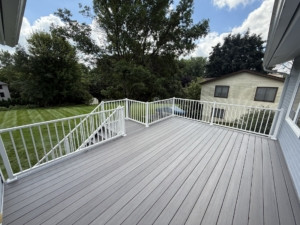
Composite decking comes in warm browns, cool grays, light neutrals, and deep wood-inspired colors. Some boards feature varied grain patterns.
Compare samples beside your home’s siding, roofing, stone, and trim. Exterior colors can look different in direct sunlight and shade.
Darker boards may absorb more heat during sunny weather. Lighter colors may provide a more comfortable surface in exposed locations.
Board direction can also change the deck’s appearance. Borders, breaker boards, and picture-frame patterns can add a finished look.
These design features may require additional framing and labor. Include them during initial planning instead of adding them later.
TimberTech and Trex Composite Decking Options
1st Choice Remodeling offers composite decking options from TimberTech and Trex. Both manufacturers provide several colors, textures, and performance levels.
Different product lines may vary in board composition, capping, scratch resistance, moisture protection, and warranty coverage.
TimberTech explains that composite boards combine wood fibers with high-performance polymers. A protective cap helps resist moisture and preserve color.
Learn more through the manufacturer’s guide to composite decking materials and construction.
Your contractor can explain which products fit your budget and deck exposure. Always review current warranty requirements before choosing a collection.
Do Not Overlook Deck Railings
Railings provide essential fall protection on elevated decks. They also influence the deck’s overall appearance and view.
Common railing choices include composite, aluminum, cable, and mixed-material systems. Available options depend on the design and local requirements.
1st Choice Remodeling offers Westbury aluminum railing in several standard colors. Aluminum can create a clean appearance with relatively open views.
Consider these factors when choosing railings:
- Required railing height and opening limitations
- Views from the deck and interior rooms
- Coordination with decking and home colors
- Maintenance and cleaning requirements
- Gate locations for children or pets
- Stair visibility and graspable handrails
Railings should feel stable and secure. Proper structural attachment matters as much as the visible design.
Plan Deck Stairs and Yard Access Carefully
Stair placement affects how people move between the home, deck, and yard. Poor placement can interrupt furniture arrangements or landscaping.
Place stairs near natural travel routes whenever possible. However, avoid directing traffic into grills, dining chairs, or narrow walkways.
Stair landings need stable support and adequate drainage. Snow and ice can make poorly planned stairs more difficult to use.
Lighting near stairs can improve visibility after dark. Low-voltage lighting may fit within rails, posts, risers, or nearby landscaping.
Permits for Deck Additions in St. Michael
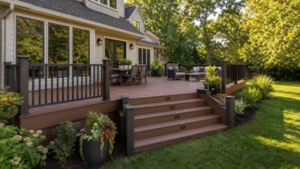
Deck projects must follow local zoning and building requirements. These rules address structural safety, placement, stairs, railings, and frost protection.
The City of St. Michael requires permits for many decks and structural projects. Many applications also require a plan review.
The city’s deck guidance identifies several permit triggers. These include attachment to a structure or height above the surrounding grade.
Visit the City of St. Michael Building Department for current permit information.
Requirements can change, so confirm details before construction. Your contractor should explain who will prepare and submit the application.
What Affects the Cost of a Composite Deck?
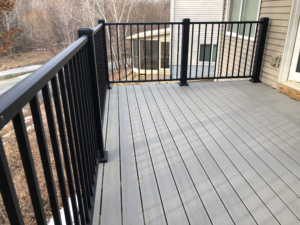
Square footage represents only one part of deck pricing. Design choices and site conditions can significantly affect the final investment.
Common cost factors include:
- Deck length, width, and height
- Composite product line and board profile
- Framing materials and structural requirements
- Number and location of stairs
- Railing material and total length
- Demolition and removal of an existing deck
- Footing requirements and soil conditions
- Site access for workers and materials
- Fascia, skirting, lighting, or built-in features
- Permit fees and required inspections
Request a detailed written estimate. It should identify materials, structural work, railings, stairs, demolition, permits, and cleanup.
Questions to Ask a Composite Deck Contractor
A deck addition becomes a permanent structural feature. Therefore, contractor experience and project details deserve careful review.
Ask potential contractors these questions:
- Are you licensed and insured in Minnesota?
- Which composite decking brands do you install?
- Who will create the deck design?
- Who will obtain the required permits?
- How will the deck connect to my home?
- What footing system will you use?
- Which framing materials are included?
- What product and workmanship warranties apply?
- How will you protect my yard during construction?
- What could change the final project cost?
Compare proposals using the complete project scope. A lower estimate may exclude railings, demolition, permits, fascia, or structural repairs.
Build a Composite Deck for Your St. Michael Home
A well-planned composite deck can expand your living space and improve how you enjoy your yard.
The best designs balance size, traffic flow, furniture, shade, stairs, safety, and exterior appearance. Durable materials support that design for years.
1st Choice Remodeling builds and upgrades composite decks throughout St. Michael and the Twin Cities metro.
Our team offers TimberTech and Trex decking with multiple colors, grains, and product levels. We also offer coordinated aluminum railing options.
Explore our composite deck installation and replacement services.
You can also view examples of completed exterior improvements in our project portfolio.
Ready to create a better outdoor living space? Contact 1st Choice Remodeling to request a free in-home estimate.
Published August 2026