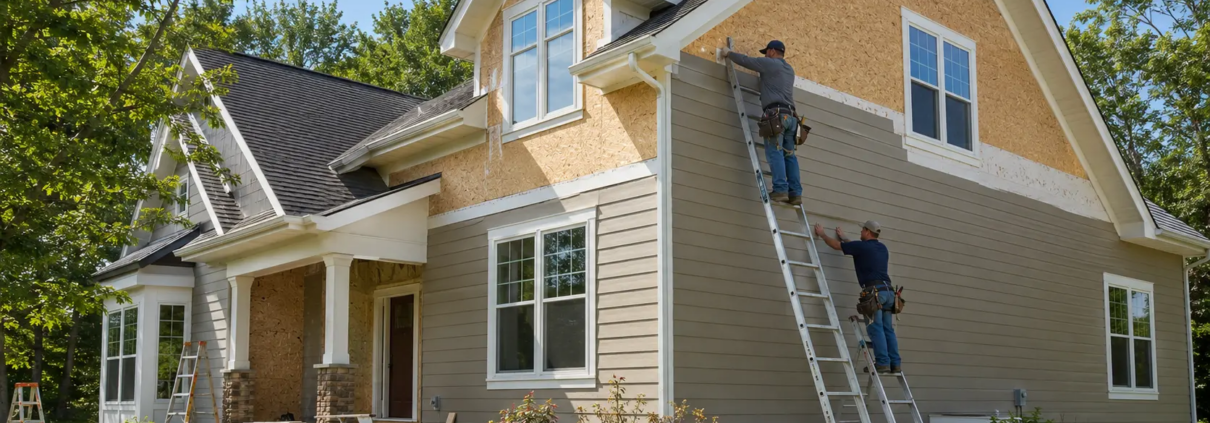
Siding Installation Maple Grove services help protect homes from moisture, wind, temperature changes, and seasonal storms. The right siding can also reduce maintenance, improve curb appeal, and support your home’s long-term value. Material quality matters, but careful installation remains equally important.
Frequently Asked Questions About Siding Installation in Maple Grove

What siding works best for homes in Maple Grove, Minnesota?
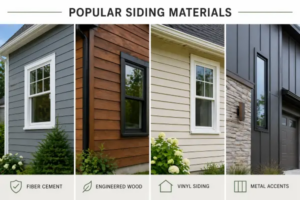
Vinyl, engineered wood, fiber cement, and steel can all perform well in Maple Grove. The best choice depends on your budget, design goals, maintenance preferences, and home.
How do I know when my siding needs replacement?
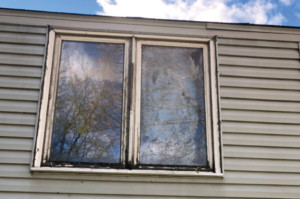
Watch for cracks, warping, loose panels, fading, moisture damage, or rising maintenance needs. Interior drafts may also suggest exterior wall problems.
Can new siding make my home more energy efficient?
New siding can support efficiency when installers address insulation, air sealing, housewrap, and gaps. Siding alone does not determine a home’s efficiency.
How long does siding installation usually take?
Many residential projects take one to two weeks. Weather, home size, material choice, and underlying repairs can change the schedule.
Should damaged siding be repaired or completely replaced?
Localized damage may only require repair. Widespread deterioration, unavailable matching materials, or recurring moisture problems may justify full replacement.
Does siding installation require a permit in Maple Grove?
Permit requirements can depend on the project’s scope. Your contractor should confirm current requirements before starting work.
Planning Siding Installation Maple Grove Homeowners Can Depend On
Maple Grove homes face freezing winters, humid summers, strong winds, hail, and frequent temperature changes. These conditions place ongoing stress on exterior materials.
Quality siding creates the visible layer of a larger protective wall system. That system should help manage water, airflow, and changing temperatures.
However, siding cannot perform correctly when installers overlook flashing, housewrap, seams, or wall damage. Proper preparation protects both the siding and the structure behind it.
The U.S. Department of Energy explains that a continuous drainage plane helps protect wall cavities from moisture. It should work with flashing around windows, doors, and other openings.
Homeowners can learn more from the Department of Energy’s guide to drainage planes behind exterior cladding.
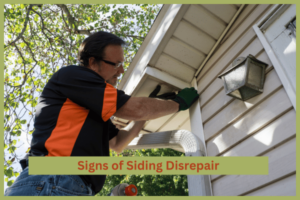
Signs Your Maple Grove Home May Need New Siding
Some siding problems remain easy to see. Others develop behind panels or near exterior openings.
Look for these common warning signs:
- Cracked, warped, loose, or missing siding panels
- Fading that creates an uneven exterior appearance
- Soft areas, swelling, rot, or visible moisture damage
- Gaps around windows, doors, vents, or utility openings
- Peeling interior paint near outside walls
- Recurring repairs across several sections
- Siding that no longer matches after previous repairs
- Higher maintenance needs each year
A professional inspection can help identify the cause and extent of the damage. It can also reveal whether targeted repairs remain practical.
After hail or strong winds, examine every side of the house. Damage may affect one elevation more than another.
Learn more about siding repair or replacement after hail damage.
Comparing Siding Materials for Minnesota Homes
No single siding material works best for every property. Homeowners should compare durability, appearance, maintenance, and total project cost.
| Siding Material | Primary Advantages | Points to Consider | Good Fit For |
|---|---|---|---|
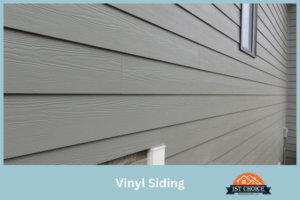
| Vinyl siding | Affordable, versatile, and low maintenance | Quality and impact resistance vary by product | Homeowners seeking value and simple upkeep |
| Insulated vinyl | Added rigidity and improved wall coverage | Costs more than standard vinyl siding | Homes needing additional exterior insulation |
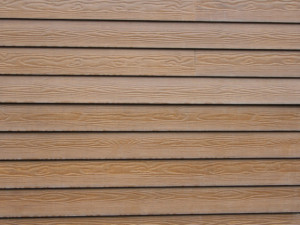
| Engineered wood | Warm appearance and strong design flexibility | Requires correct installation and moisture control | Traditional and contemporary Minnesota homes |
| Fiber cement | Durable, stable, and available in many styles | Heavy material requires experienced installation | Homeowners prioritizing durability and appearance |
| Steel siding | Strong, long-lasting, and low maintenance | Higher initial cost and possible impact denting | Homes exposed to demanding weather conditions |
Explore a detailed comparison of the most common types of home siding.
Installation Quality Matters as Much as the Material
Premium siding cannot overcome poor installation. Small errors may allow water, air, or pests to reach vulnerable areas.
A dependable installation process should include several important steps:
- Inspect the existing siding and underlying wall surfaces.
- Remove damaged materials without harming nearby features.
- Repair sheathing or structural problems when necessary.
- Install or correct the water-resistant barrier.
- Flash windows, doors, rooflines, and wall penetrations carefully.
- Follow manufacturer requirements for spacing and fastening.
- Finish corners, trim, vents, and transitions cleanly.
- Complete a final inspection and organized cleanup.
These details help siding manage Minnesota’s seasonal movement. They also reduce the risk of hidden moisture problems.
Can New Siding Improve Energy Efficiency?
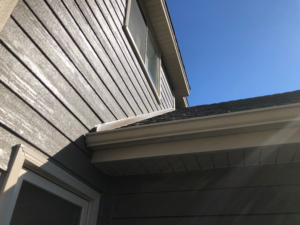
Siding replacement creates an opportunity to inspect the exterior wall system. Installers can identify gaps, damaged housewrap, or weak insulation areas.
Some projects can include rigid exterior insulation or insulated siding. However, expected benefits depend on the entire wall assembly.
Ask your contractor how the project will address air leakage, moisture drainage, insulation, and exterior openings. These details often matter more than marketing claims.
New siding may also improve indoor comfort by reducing drafts near exterior walls. Results will vary based on the home’s existing condition.
Choosing Siding Colors and Styles in Maple Grove
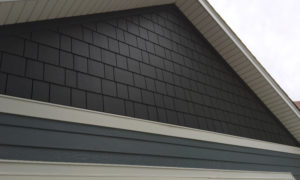
Siding changes a large portion of your home’s visible exterior. Therefore, color and profile deserve careful consideration.
View samples outdoors during different daylight conditions. A color can appear warmer, cooler, lighter, or darker throughout the day.
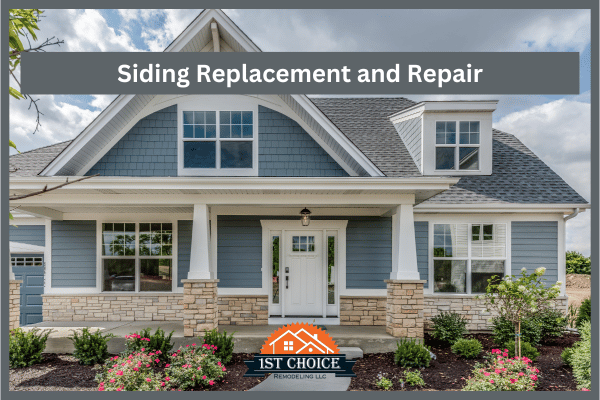
Consider your roof, stonework, brick, windows, doors, and permanent landscaping. These features should work together as one exterior design.
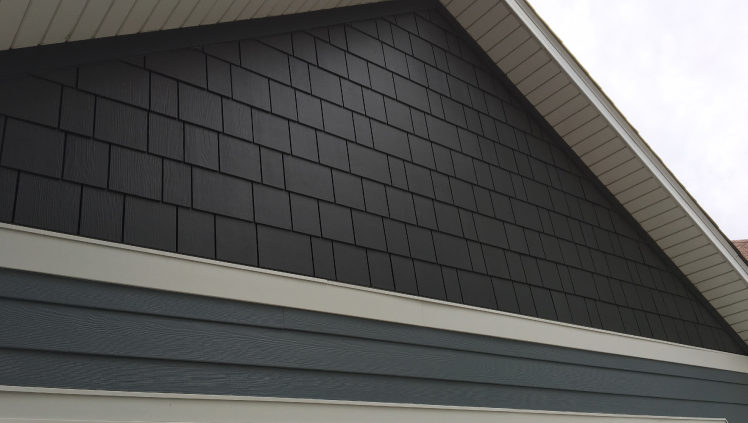
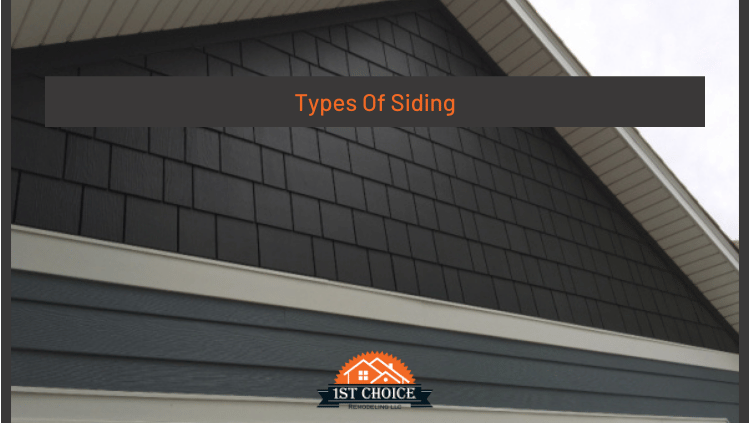
Many homeowners now combine horizontal siding with vertical accents. Others use stone, shakes, or contrasting trim around key architectural features.
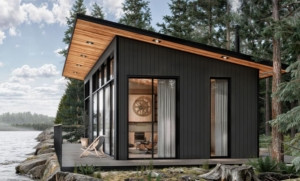
Darker colors can create a modern appearance. Still, the color should complement the home’s architecture and surrounding neighborhood.
Review additional ideas in our guide to the latest siding trends for homes.
Questions to Ask Before Hiring a Siding Contractor
A detailed proposal makes estimates easier to compare. It also reduces uncertainty once installation begins.
Ask each contractor the following questions:
- Are you licensed and insured in Minnesota?
- Which siding materials do you regularly install?
- Does the estimate include removal and disposal?
- How will you inspect and repair damaged sheathing?
- How will you manage flashing and water drainage?
- What manufacturer and workmanship warranties apply?
- Who will supervise the project?
- How will you protect landscaping and outdoor features?
- What could change the final price?
- How will you communicate schedule updates?
Do not compare estimates using price alone. Confirm that each proposal includes the same materials, preparation, trim, and finishing details.
Plan Your Maple Grove Siding Project With Confidence
New siding should protect your home while improving its appearance. The right project balances product quality, preparation, installation, and practical design.
1st Choice Remodeling provides exterior remodeling services throughout Maple Grove and the Twin Cities metro.
Our team can help you compare siding materials, colors, profiles, and installation options. We focus on dependable workmanship and lasting exterior protection.
Visit our siding installation page to explore available services and project options.
You can also learn about our complete exterior remodeling services in Maple Grove.
Ready to update your home’s exterior? Contact 1st Choice Remodeling to request your free in-home siding estimate.